Hydraulic Cylinders
- Home
- Hydraulic Cylinders
High-performance hydraulic cylinders designed for strength, durability, and precision in demanding industrial applications.

Founded in 2014, Confiar Engineers has grown into a trusted name in the field of industrial hydraulic equipment. With a strong commitment to quality, performance, and reliability, we specialize in delivering engineered solutions that meet the evolving demands of modern industries.
©2026. Confiar Engineering . All Rights Reserved | Design & Development By HubTech Media Solutions
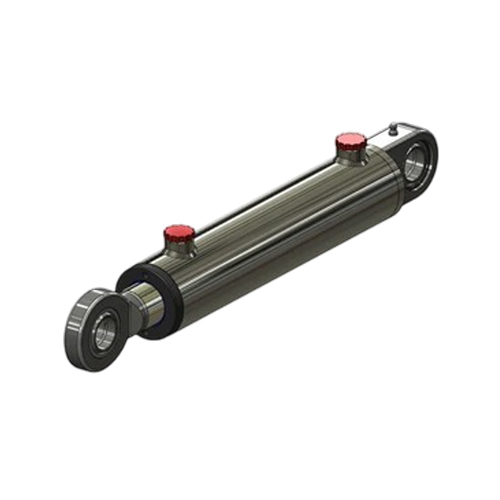
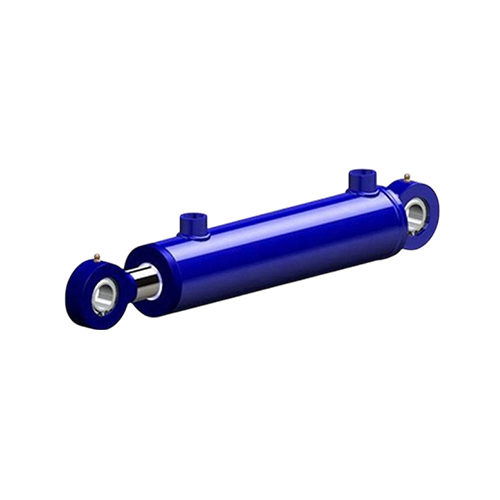
Confiar Engineers is a well-established organization that specializes in offering a comprehensive range of Double Acting Hydraulic Cylinders. As a trusted name in the industry, they manufacture their cylinders using the latest technology and premium quality components, ensuring that they meet the market’s set standards and guidelines. Their team of deft professionals supervises the entire manufacturing process, ensuring that the end product is of the highest quality.
A cylinder that has a double-acting piston is one in which the working fluid alternately operates on the two sides of the piston. A hole must be made at one end of the cylinder for the piston rod, which is supplied with a gland or “stuffing box” to prevent the working fluid from escaping, in order to link the piston in a double-acting cylinder to an external mechanism, such as a crank shaft. Steam engines frequently have double-acting cylinders, although other engine types seldom do. They are frequently used in hydraulic and pneumatic cylinders when it’s necessary to generate force in both directions. A port at either end of a double-acting hydraulic cylinder receives hydraulic fluid to power both the piston’s retraction and extension.
Their products undergo stringent testing based on several quality determining factors, ensuring that they meet the highest standards of performance, reliability, and durability. As a result, these cylinders are widely known for their quality and can be availed at an industrial leading price.
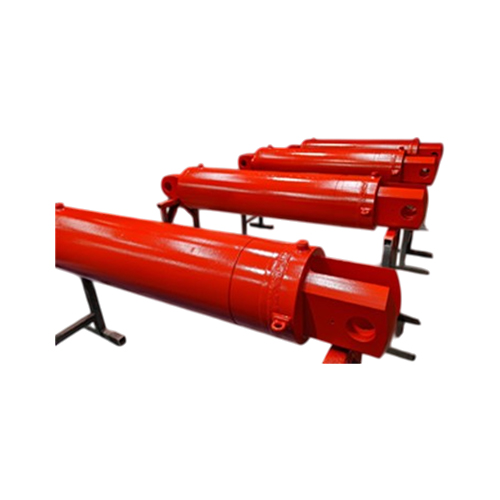
A telescopic hydraulic cylinder is a type of hydraulic cylinder that features multiple nested stages, which allows for a much longer stroke length than a traditional hydraulic cylinder of the same overall length. These cylinders are commonly used in applications where a long stroke is required but space is limited, such as in dump trucks, cranes, and various types of machinery.
Confiar Engineers is a company that offers high-quality Telescopic Hydraulic Cylinders in Navi Mumbai, Mumbai, Thane, India and Dubai. Their products are customized to meet the specific needs of their clients in various industries. we have a team of experts who design and manufacture these cylinders, which are tested to ensure quality.
In addition to manufacturing new cylinders, Confiar Engineers also provides repair and reconditioning services for their products. The cylinders are easy to install on complex mechanical systems and are available in various capacities and technical specifications to meet the specific requirements of their clients.
Heavy weights may be lifted and pushed with the help of specially designed hydraulic cylinders. The price and availability of a bespoke hydraulic cylinder are what set them apart from a normal hydraulic cylinder. Custom hydraulic cylinder design, fabrication, and production costs are relatively greater than those for ordinary hydraulic cylinders. Moreover, the production of bespoke cylinders takes longer than that of ordinary cylinders.
Based on design considerations and application-specific concerns, custom hydraulic cylinders are constructed. Cylinder bore size, cylinder configurations, mounting options, piston rod size, rod ends/threading, stroking distance, and stop tubing are all taken into account while customising a hydraulic cylinder. The design for the application-specific customisation takes the environment, operating pressure, temperature, flow rate, workload, etc. into account.
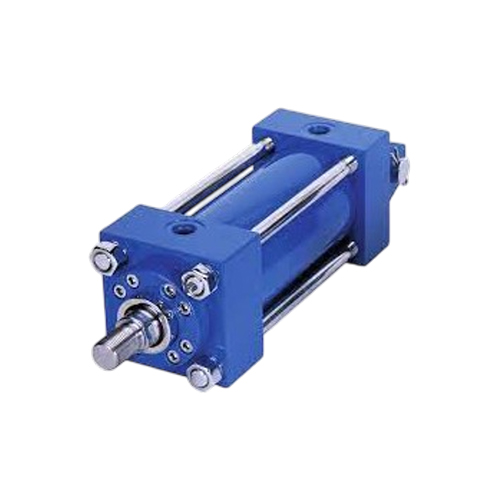
Four rods (bolts) join the ends of a double-acting hydraulic cylinder in a tie-rod hydraulic cylinder, which adds strength and stability and keeps the cylinder from rupturing under pressure. Providing power in both directions (extending and retracting), double-acting tie-rod hydraulic cylinders provide more accurate movement. They support, lift, and press large weights in agricultural machinery, industrial machinery, and construction equipment and feature a linear actuator. Seals can be changed as necessary to maintain cylinders operating properly.
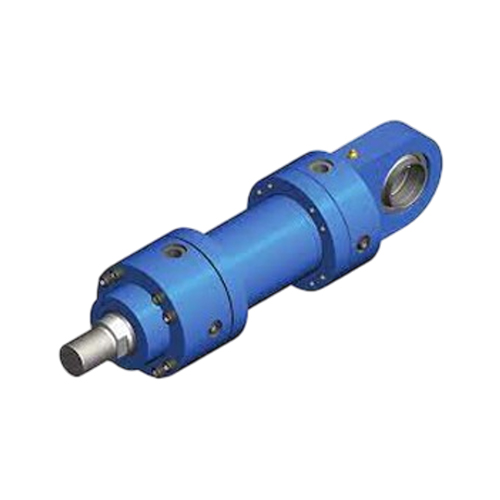
A high pressure hydraulic cylinder might be the best option for your particular requirements if your specialised applications call for pressures of up to 5,000 psi. Our high pressure cylinders, which have sturdy, heavy-duty designs, provide dependable performance and durability in a range of demanding uses.
High-pressure hydraulic cylinders that are strong and dependable are what Maverick Machine & Hydraulics is dedicated to providing. We provide the parts necessary for our customers’ demanding work environments in the mining and forestry sectors.
The inside diameter of the cylinder shaft is simply referred to as the bore of a hydraulic cylinder. This is an extremely essential specification, as from the bore you can determine the piston area, maximum operating pressure and the force the cylinder can generate.
The inside diameter of the cylinder shaft is simply referred to as the bore of a hydraulic cylinder. This is a crucial specification because you can infer the piston area, the highest operating pressure, and the force the cylinder can produce from the bore. In addition to custom diameters, hydraulic cylinders are available in a variety of ISO standard measurement bores, ranging from 40mm to 800mm. The external diameter measurement is also known as the outer diameter, or OD, to prevent confusion.
Steelworks employ hydraulic machinery because of the high density of forces and its durability. For instance, roller adjusting cylinders can have piston diameters of more than 1 m, necessitating, in addition to large forces, control accuracies of a few hundredths of a millimetre.
Nearly every process in the steel industry uses hydraulic drives. With the aid of linear scale applications and PLC, the system has been converted into an electro-hydraulic one, particularly in recent years. Blast furnaces, steel mills, continuous casting facilities, hot strip rolling mills, wire rod and rebar manufacturing plants, and cold rolling mills, respectively, are now entirely hydraulically powered.
Drilling and removing important materials from the Earth’s surface both demand a lot of power. A drill site’s success depends on replacement hydraulic cylinders that provide strength, reliable performance, and the ability to tolerate challenging situations including the arctic, offshore, and hot, unclean surroundings. In remote mining and drilling operations, reliability is essential to avoiding expensive downtime.
Replacement oil/gas drilling cylinders developed in the United States by Hydraulic Cylinders, Inc. are designed to lift big loads. Our tough hydraulic cylinders shield your cylinder from heat, cold, dust, and filth while withstanding seawater and other corrosive factors. Heavy loads may be lifted and the necessary force can be delivered for difficult applications thanks to the high-performance, long-lasting hydraulic cylinder design.
Eight essential parts make up a hydraulic cylinder: the clevis, gland, port(s), barrel, rod, piston, end cap, and seal. These components work together to enable the hydraulic cylinder to pressurise fluid, which in turn moves a piston and produces power for a machine.
The majority of our machinery is powered by hydraulic cylinders and rams, but the basic structure dates back more than 200 years. Since they were first used in the 1790s, hydraulic cylinders have remained unchanged in both construction and design.
These components, which are a form of mechanical actuator, or “motor,” are designed and constructed to cooperate to carry out a certain purpose, whether it be to extend, retract, or do both. A hydraulic pump provides the actual power.
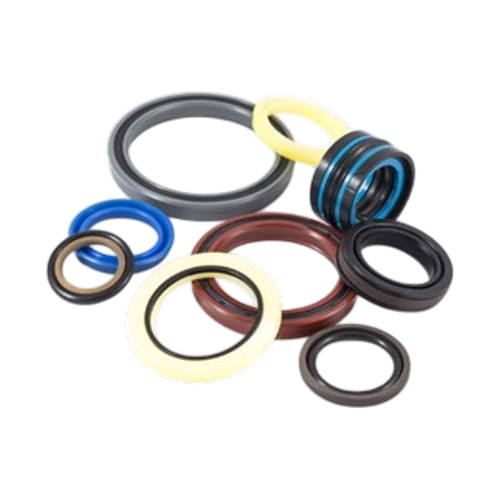
The openings between various components in the hydraulic cylinder are sealed using hydraulic cylinder seals. They are made to keep hydraulic pressure constant, keep solid or liquid impurities out, and retain hydraulic fluids. Different seal designs and performance-improving characteristics are required for these activities. To stop fluid flow, seal material must adapt to imperfections in metal surfaces. The seal must quickly expand or contract in order to follow dimensional changes in order to adapt to changes in clearance gap size. Finally, to resist being extruded into gaps, the seal must have sufficient modulus and hardness to withstand shear stress caused by system pressure.